

 简体中文
简体中文


At skubbe spolerne
Foretag forskning, design, fremstilling og ingeniørtjenester af FDY, POY, HOY og indust...
Foretag forskning, design, fremstilling og ingeniørtjenester af FDY, POY, HOY og indust...
Foretag forskning, design, fremstilling og ingeniørtjenester af FDY, POY, HOY og indust...
At skubbe spolerne
At skubbe spolerne
Introduktion Tekstilindustrien udvikler sig konstant, hvor producenterne søger måd...
Se mere1. Introduktion: Hvorfor polypropylenfiber fortjener et nærmere kig Blandt s...
Se mereIntroduktion Efterhånden som tekstilindustrien skifter mod mere bæredygtig praksis...
Se mereMesterlig tilpasning, der baner vejen for nye præstationer! Den POY spinning test maskine...
Se mereI årtier er plast blevet fremstillet af olie. Men en ny generation af materialer er ved at opstå ...
Se mere1. Technical standards and process challenges for aluminum tube surface quality
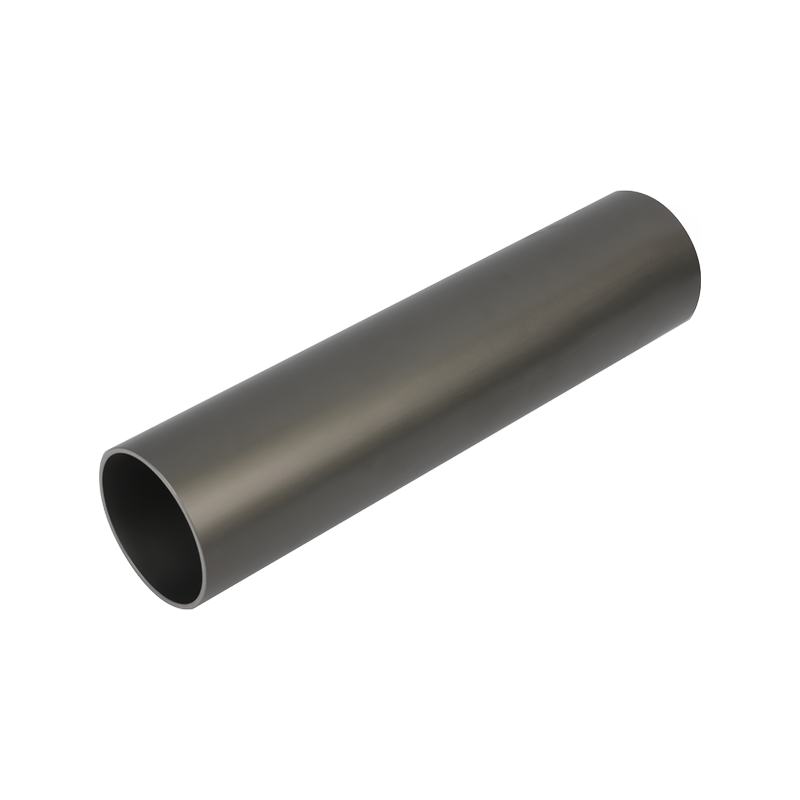
In high-speed winding systems, aluminum tubes must withstand tens of meters of yarn friction per second, and their surface quality directly affects the uniformity of yarn unwinding. Shengbang Mechanical uses precision dynamic balancing equipment for processing to ensure that the cylindricality of the aluminum tube is controlled within a very small range, but even so, it is still difficult to avoid surface scratches in long-term use. If the depth of these scratches exceeds a certain threshold, it will destroy the contact continuity between the aluminum tube and the yarn at the microscopic level.
From the perspective of materials science, the surface oxide layer of aluminum material breaks at the scratch, and the exposed metal matrix is in direct contact with the yarn fiber, resulting in a sudden change in the friction coefficient. We simulated different working conditions through temperature calibration equipment and found that when the scratch depth reaches a significant proportion of the aluminum tube wall thickness, the yarn breakage rate will increase significantly. This data is particularly evident in the production of special yarns (such as two-component yarns).
In terms of the surface treatment process of Barmag Spinning Machine Winder Parts Aluminum Tube, Shengbang Mechanical uses a variety of technologies such as anodizing, electroplating, and sandblasting. Anodizing, as an electrochemical treatment process, can form a dense aluminum oxide film on the surface of the aluminum tube, which not only increases the hardness and wear resistance, but also provides good corrosion resistance and decorativeness. Electroplating technology further improves the wear resistance and conductivity of the aluminum tube by plating the metal layer. Sandblasting improves the adhesion of the coating by increasing the surface roughness.
2. Mechanical mechanism of scratch-induced breakage rate
During the dynamic winding process, scratches form local stress concentration points and change the yarn tension distribution pattern. Through plasma coating equipment, a nano-scale composite layer is constructed on the surface of the aluminum tube, and it is found that the depth of the scratches on the treated surface can be reduced to a large extent. However, for the untreated original aluminum tube, under high-speed winding, tiny scratches can cause a significant increase in the fluctuation amplitude of the yarn tension.
This tension fluctuation is transmitted to the package forming area through the yarn, forming a periodic stress concentration on the end face. The monitoring data of the multifunctional spinning test machine shows that when the scratch spacing is less than a certain range, the yarn breakage shows obvious chain reaction characteristics - the initial breakage causes a sudden increase in the tension of adjacent yarns, resulting in continuous breakage.
3. Process improvement and quality control system
In response to the scratch problem, Shengbang Mechanical has developed a "three-step" surface quality control process: first, mirror processing is carried out in the machining workshop to make the surface roughness reach an extremely high standard; second, a protective film is deposited in the plasma coating workshop to increase the surface hardness to a higher level; finally, a long-term continuous friction test is carried out in the special yarn spinning workshop.
The original high-energy ion beam nozzle treatment technology provides a new path to resolve the scratch crisis. By changing the surface structure of the nozzle, the tow produces a microscopic buffering effect when passing through the scratch area. The application case of Nantong Branch shows that the winder treated with this technology has a significantly reduced breakage rate under the same scratch conditions.
ADRESSE: No.1298, Zhouan Road, Economic and Technological Development District, Jiaxing City, Zhejiang Province
TELEFON: +86 19057031687
TLF: 86-0573-83777752
E-MAIL: [email protected]
Jiaxing Shengbang Mechanical Equipment Co., Ltd. Alle rettigheder forbeholdes. Skik Barmag Spinning Machine Winder Dele Aluminiumsrør Producenter
